On 19 March 2026, La French Tech Shanghai hosted an evening dedicated to one of the most debated questions in the industry: is AI in e-commerce a true driver of business performance, or just an expensive solution looking for a problem? Held at PLTFRM’s office in the Xuhui District, the event brought together practitioners across three roles that rarely share the same space: the platform setting the rules, the brand absorbing the risk, and the agency or tech provider claiming to provide the solution.
The format was deliberately conversational. The evening aimed to distinguish marketing claims from measurable outcomes, featuring four speakers with substantial real-world experience to lend credibility to the distinction: Bonnie Ma, Ecosystem Manager and Author at adidas; Alexandre Ouairy, Co-Founder and Director of PLTFRM; Ranjit Singh, CEO of Fugumobile; and Vincent Henric, Algorithm Engineer at Alibaba.
The Reality Check: What Is Actually Happening on the Ground
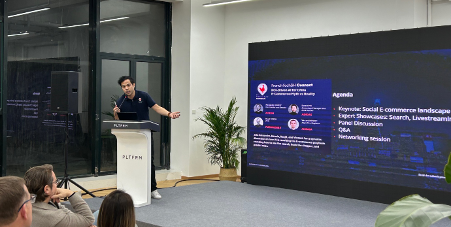
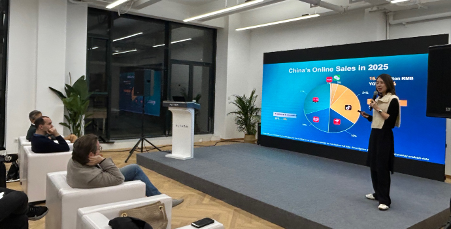
The evening began with a keynote from Bonnie Ma, who offered the perspective of a global brand operating at scale within China’s social commerce ecosystem. Her talk, centred around the journey from zero to one, relied on concrete data and honest observations about a market that has matured more quickly than most brands expected.
Her main argument was that the challenge of extracting ROI from social e-commerce has increased substantially over the past two years. The platforms have become more advanced, the competition fiercer, and the disparity between what brands invest in AI tools and what they actually observe in their conversion data has grown wider rather than narrowed. She urged the audience to think critically about the assumptions underlying their strategies and to differentiate between what succeeds at the campaign level and what succeeds at the business model level.
Her message set the tone for everything that followed: in a market as dynamic and competitive as China’s, the most crucial decisions brands make are not about which tool to adopt, but about how genuinely they assess what it delivers.
Three Experts, Five Minutes Each: The ROI Pillars
Following the keynote, Alexandre Ouairy, Ranjit Singh, and Vincent Henric each outlined a specific area where AI is, or is not, producing tangible results in practice. The format was and intentionally concise: five minutes per speaker, centered around a real tool, a real challenge, and one measurable outcome.
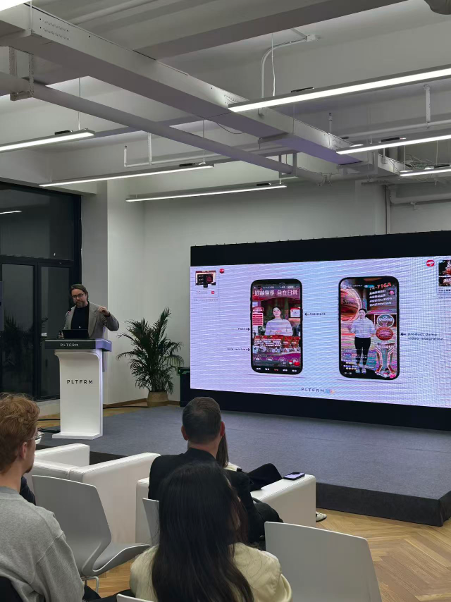
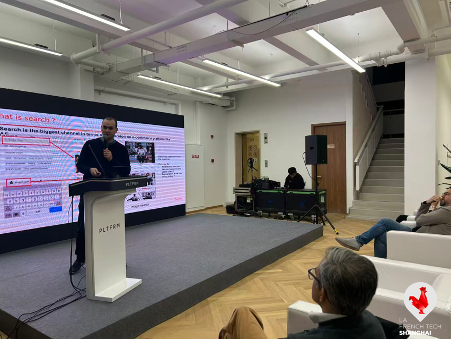
Vincent Henric began with search, discussing how AI is transforming product discoverability on major platforms. His focus was on algorithm logic: how search rankings are generated, which signals are influential, and why brands that depend on AI-generated content at scale often misinterpret the rules they are playing by. His presentation clarified that success in search today demands not only content volume but also a clear understanding of how the algorithm interprets intent at the moment a user enters a query.
Alexandre Ouairy addressed live commerce, presenting data on the conversion gap between AI-powered virtual hosts and human presenters. The gap is closing faster than most brands anticipate, and the implications are considerable: not just for cost structures but also for the question of where human involvement still provides irreplaceable value. His presentation encouraged the audience to view live commerce not merely as a channel for automation but as an experience to craft, where AI’s role is to enhance conversion at specific moments rather than replace the relationship between host and viewer.
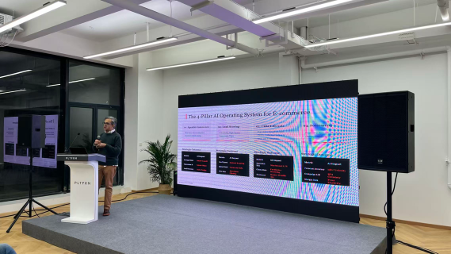
Ranjit Singh outlined Fugumobile’s approach to prediction, focusing on how AI-driven demand forecasting and lead scoring reduce guesswork in inventory and campaign decisions. His framework organised the AI operating model for e-commerce into four pillars: agentic commerce for real-time personalisation within stores, lead scoring to prioritise high-intent conversion tiers, CRM and lifecycle management for post-sales retention and churn prediction, and predictive demand sensing drawing on both social and transactional signals. Each pillar was linked to a specific metric and a particular business outcome, grounding an otherwise abstract topic in tangible insights an e-commerce director could take back to their P&L.
The Great Debate: Friction, Power and Profit
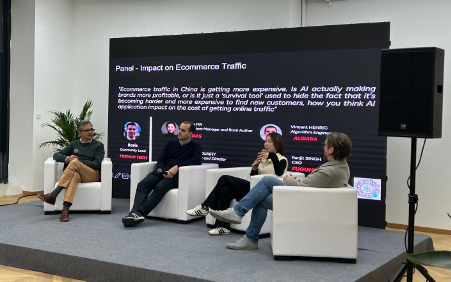
The panel discussion that followed involved all four speakers engaging in an open debate moderated by Boris from La French Tech Shanghai. The conversation addressed the structural tensions shaping e-commerce in China today: the increasing cost of traffic acquisition, the accountability gap between technology providers and the brands relying on them, and how quickly tools become outdated in a market where platform rules can change overnight.
What made the exchange valuable was less the topics themselves than the candidness with which the speakers approached them. Each brought a different perspective, and the tension between those viewpoints fostered a conversation that doesn’t often happen when everyone on stage has already agreed on what AI can do.
A Conversation Worth Having
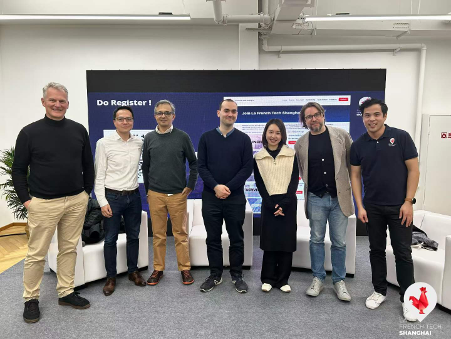
The event concluded with a group photo and networking over a buffet, but the discussion that continued afterwards reflected what had made the evening successful: the willingness of practitioners with real stakes in the outcome to speak from experience rather than from a prepared narrative.
La French Tech Shanghai thanks Bonnie Ma, Alexandre Ouairy, Ranjit Singh, and Vincent Henric for the quality and honesty of their contributions, and all attendees whose questions pushed the conversation into territory that conference panels rarely reach.
For a community built around connecting international talent with real business challenges, evenings like this do more than inform. They foster a shared and more truthful vocabulary for discussing what AI can and cannot do in one of the most demanding commercial environments in the world.