
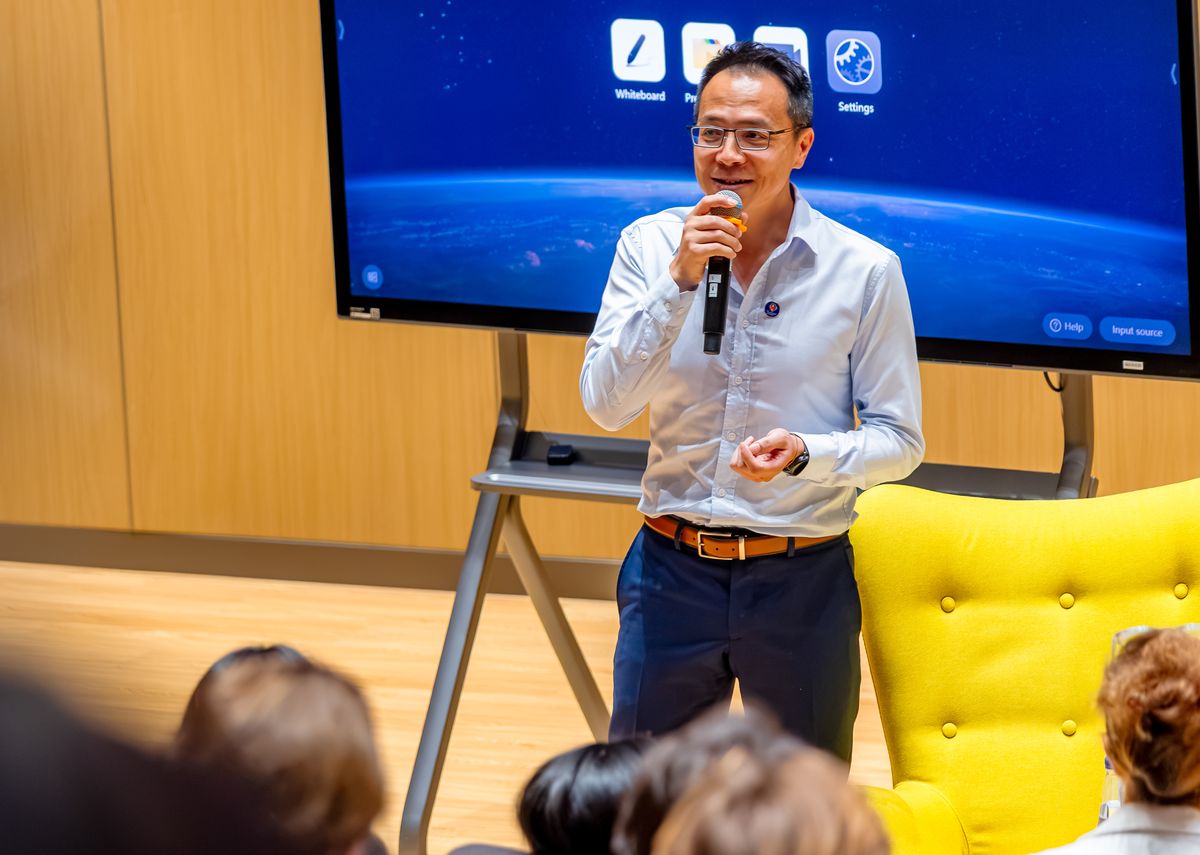
FrenchTechSH Connect × NYU Shanghai · Thursday, October 22, 2026 · Dangdang Auditorium, Qiantan Campus
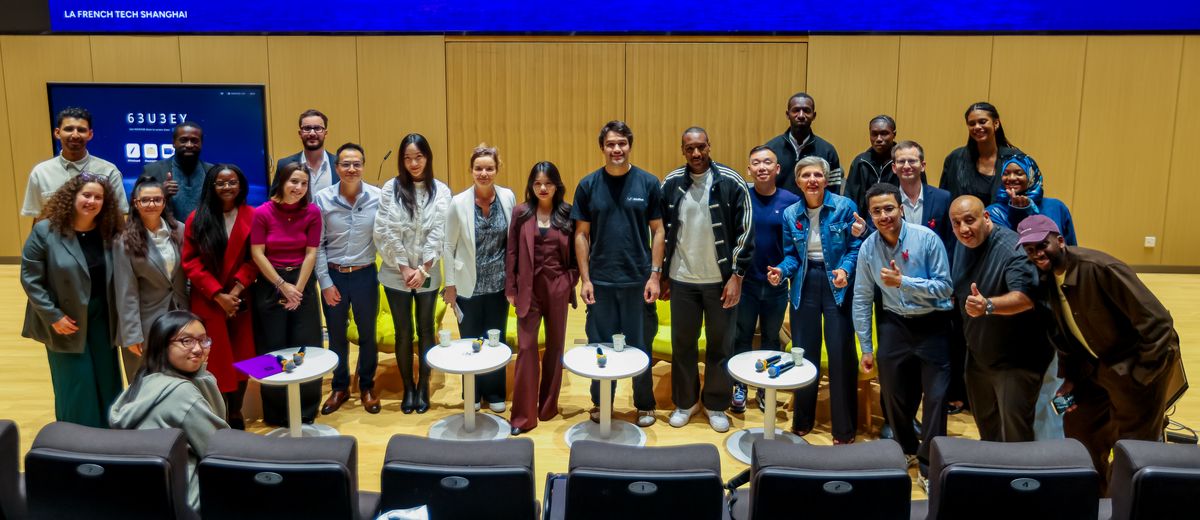
Thank you to everyone who joined us at NYU Shanghai for Physical AI: From Labs to Humanoids: more than 270 of you registered for our October Connect. Here is a look back at the evening: seven founders on stage, a panel on autonomous robots, and what the room thinks robots will look like in 2030.
Les Déterminés on stage
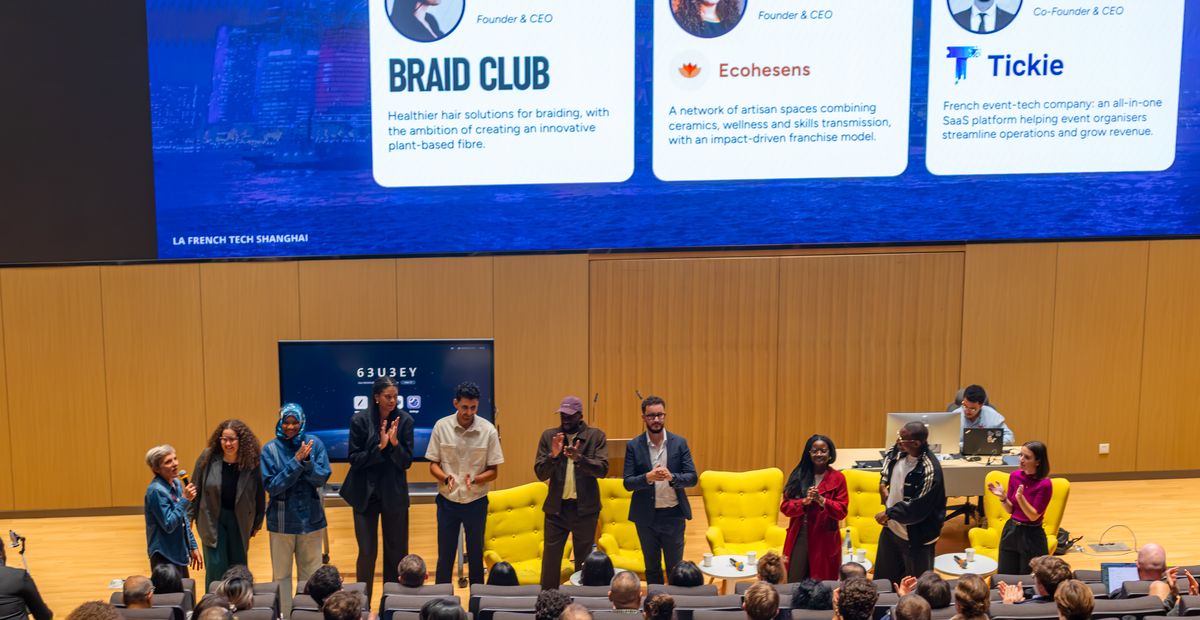
The evening opened with Les Déterminés. Moussa Camara introduced the programme, Cathy presented the Learning Expedition, and seven founders each pitched their startup in one minute: Imagine Data, Wapply, Good IA, Naaniya, Braid Club, Ecohesens and Tickie.

The panel: autonomous robots, for when and for whom?
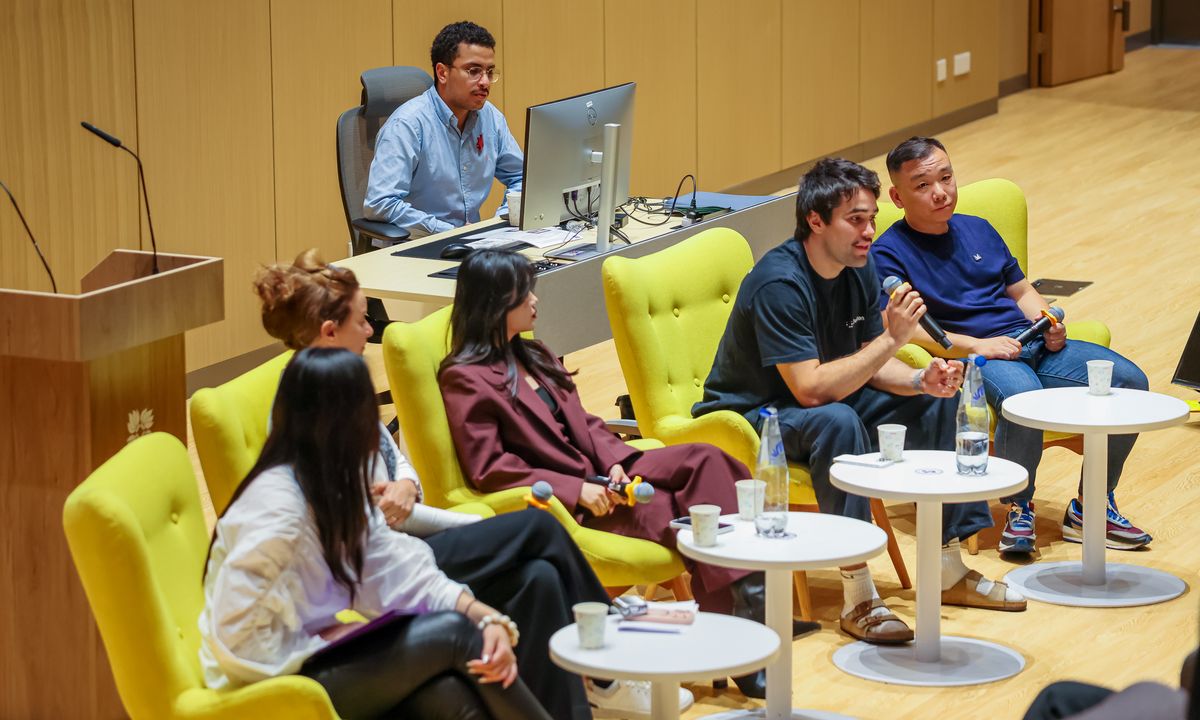
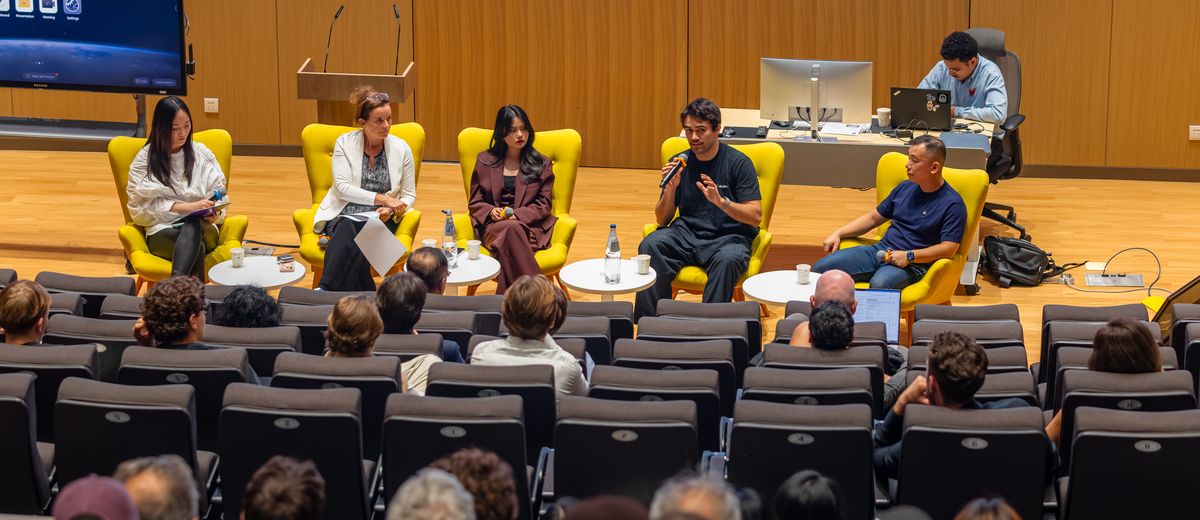
Moderated by Helena Rong (NYU Shanghai), with Gabrielle Chou (Professor of Practice, NYU Shanghai), Nicky Chen (Director of International Marketing & Sales, Galileo Robotics), Francesco Crivelli (Founder, Intuition Dev) and Eric Xu (Tech Partner, Matrix Robotics). Over an hour, they moved from what robots can really do today to what blocks deployment, then to humanoids and new business models, and finally to where the opportunities are for students and entrepreneurs.
Five takeaways from the panel
- Do the maths before buying a robot. Start from what the task costs you today, add the integration cost, and check the payback period, which is usually 18 to 24 months. The best first use cases are heavy or dangerous jobs, and the ones you struggle to staff.
- Humanoids have the right shape, not yet the reliability. Our tools and workflows are built for human hands, so a humanoid that manipulates well can use them as they are. But reliability is still the barrier to large-scale deployment. The advice for companies today: prove your return on investment with more mature, non-humanoid robots first.
- Robots as a service. The end goal is to pay per completed task, the way you pay for labour, which lowers the barrier for companies. For very high-risk work such as high-voltage power line maintenance, some operators are already investing in humanoid R&D.
- Integration is the real cost. Today, integrating a robot can cost about five times the hardware itself. General-purpose physical AI models aim to make that cost negligible, and to handle the unexpected in messy, unstructured environments where fixed industrial robots fail.
- Physical AI needs more than engineers. Deployment and integration companies, people who know one industry’s pain points inside out, and multilingual, cross-cultural profiles are all in demand. One caveat for founders: deployment businesses grow with their headcount, not at venture-capital speed. And China’s complete hardware supply chain is a real advantage for anyone building in the field.
“Birds don’t fly with jet engines, and planes are not about their wings.”
A panelist, quoting their former lab director at Stanford: robots don’t have to copy the human body to do human work.
What the room thinks
During the panel, the audience voted live on WeChat, and each poll opened a new chapter of the discussion. Here are the results of all five.
Poll 1
Have you ever interacted with a robot in your daily life?
Poll 2
Real or hype? A robot can reliably fold your laundry at home today.
Poll 3
What’s really holding robots back in companies?
Poll 4
Five years from now, humanoid robots will be…
Poll 5
By 2030, where will most people encounter robots regularly?
Thank you
A big thank you to NYU Shanghai for hosting us, to Helena Rong and our four panelists, to Les Déterminés and the seven founders, and to all the attendees and the whole community. See you at the next one!
Next event: Investor Committee – Final Pitch Day with CCI France Chine, Thursday, October 29, 17:30–19:30, at CCI France Chine Shanghai. See the event and register.
Follow us on WeChat: scan the QR code or search LaFrenchTechShanghai so you don’t miss our next events.